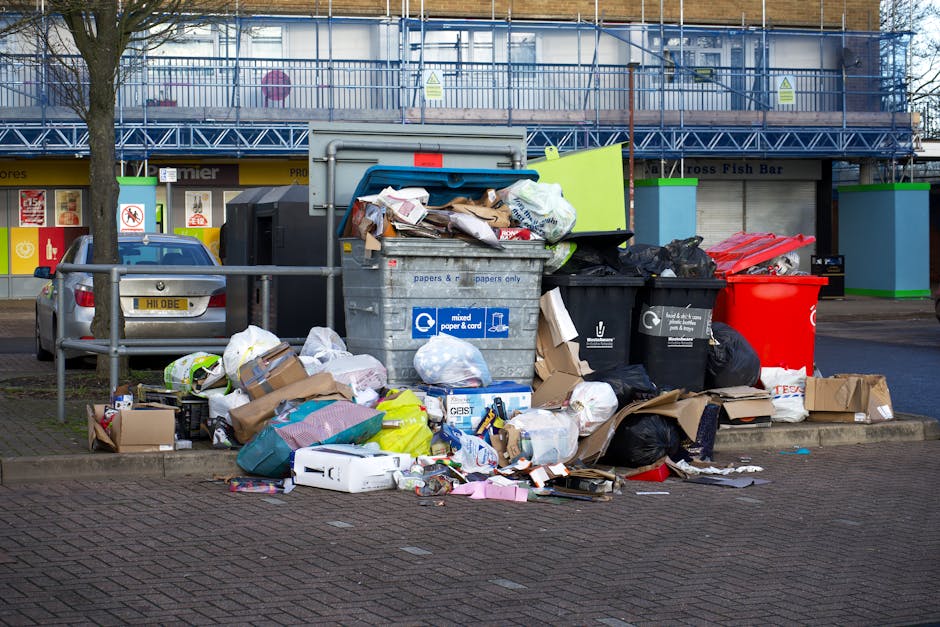
Bermondsey Spa Gardens rubbish collection guide for residents
If you live near Bermondsey Spa Gardens, rubbish has a habit of becoming urgent at the worst possible moment. A flat clear-out before visitors arrive, a broken wardrobe blocking the hallway, garden bags left after a tidy-up, or a pile of packaging that seems to multiply overnight - it all adds up quickly. This Bermondsey Spa Gardens rubbish collection guide for residents is here to make the process simpler, calmer, and a lot less messy.
We will walk through how rubbish collection usually works, what residents should prepare, where the common problems appear, and how to choose the safest, neatest route for different types of waste. You will also find a practical checklist, a comparison table, and a few real-world scenarios that reflect everyday life in and around Bermondsey Spa Gardens. Nothing overblown. Just useful guidance that helps you get the job done properly.
Table of Contents
- Why Bermondsey Spa Gardens rubbish collection guide for residents matters
- How Bermondsey Spa Gardens rubbish collection guide for residents works
- Key benefits and practical advantages
- Who this is for and when it makes sense
- Step-by-step guidance
- Expert tips for better results
- Common mistakes to avoid
- Tools, resources and recommendations
- Law, compliance, standards, or best practice
- Options, methods, or comparison table
- Case study or real-world example
- Practical checklist
- Conclusion
- Frequently asked questions
Why Bermondsey Spa Gardens rubbish collection guide for residents Matters
Rubbish collection sounds straightforward until you are the one trying to move a mattress down a narrow stairwell, sort bags from recycling, or decide what to do with a broken table that no longer fits in the lift. In a busy London setting, small waste problems can quickly become nuisance problems. They affect hallway access, the look of communal spaces, and sometimes even neighbour relations. Truth be told, nobody enjoys being the person with the overflowing pile in the corner.
For residents around Bermondsey Spa Gardens, a clear rubbish collection plan matters because homes are often compact, access can be tight, and storage space is limited. That means waste cannot always be left until "later". Later is often the moment when the bag splits, the cardboard collapses, or the item starts to smell a bit off. Not ideal.
A good rubbish collection guide also helps you think beyond the immediate lift-out. It encourages you to separate items, reduce contamination in recycling, and avoid the common mistake of mixing everyday rubbish with bulky waste or specialist materials. That last part matters more than people think. A mixed load is often slower to clear and harder to handle responsibly.
Expert summary: The easiest rubbish collection job is usually the one prepared the day before. Sort it, stack it safely, and keep the route clear. Small effort, much smoother result.
How Bermondsey Spa Gardens rubbish collection guide for residents Works
In practical terms, rubbish collection for residents usually follows one of a few routes: regular household disposal, recycling, bulky item removal, or a planned clearance for larger volumes. The right route depends on what you have, how much of it there is, and whether the material is safe for mixed waste handling. A few black bags are one thing. A sofa, loft contents, and old shelving are another.
Most residents start by identifying the waste type. That includes general household rubbish, cardboard and packaging, furniture, garden waste, old appliances, or items left over from a move or refurb. Then you decide whether the waste can be put out in the normal way or whether it needs a dedicated collection. In some cases, a service such as waste removal is the cleanest option because it handles mixed items in one visit.
There is also the access question, which sounds boring until you are carrying a heavy item through a shared entrance on a rainy Tuesday. Can the waste be moved safely? Is there a lift? Are there stairs, tight corners, or parking constraints? These details matter because they affect timing, labour, and how much preparation you need before collection day.
For flats and compact homes, it is often worth thinking about whether a specific clearance service fits better than a general rubbish collection. For example, small flat moves are usually easier to manage with flat clearance, while a full house tidy may be better handled through house clearance or home clearance. The exact choice depends on the scale of the job, but the principle is the same: match the method to the mess.
Key Benefits and Practical Advantages
When rubbish is handled properly, the benefits are immediate. Your home feels clearer, your access routes open up, and there is less clutter pulling your attention in ten different directions. That alone can feel like a relief. But there are also practical benefits that are easy to miss when you are rushing.
- Better use of space: Especially in Bermondsey flats, space is precious. Clearing waste creates room to move, clean, and breathe a bit.
- Less stress: A defined collection plan turns a vague, nagging job into a manageable task.
- Reduced trip hazards: Loose bags, broken furniture, and cardboard stacks become less of a problem when removed promptly.
- Cleaner communal areas: This is a big one in shared buildings. Neat waste handling avoids awkwardness with neighbours and management.
- Better recycling decisions: Sorting waste properly gives recyclable material a better chance of being processed correctly.
- Less back-and-forth: If the right collection is arranged from the start, you avoid repeat lifting and repeated storage of unwanted items.
There is also a less obvious benefit: good waste handling tends to encourage better habits. Once people see how much space they reclaim after a proper clearance, they often become a bit more disciplined about what they keep. To be fair, that is one of those tiny life improvements that feels surprisingly satisfying.
Who This Is For and When It Makes Sense
This guide is for Bermondsey Spa Gardens residents who want a practical, realistic way to deal with household waste, bulky items, or accumulated clutter. It is especially relevant if you live in a flat, share access with neighbours, or need to plan around work, school runs, or limited parking. If you have ever looked at a pile of unwanted things and thought, "Right, how on earth do I deal with this?", you are exactly the audience.
It makes sense in several common situations:
- after moving in or moving out
- after a decorating project or small renovation
- when replacing furniture
- after a loft, garage, or storage cupboard tidy-up
- after a garden clean-up
- when a large item simply cannot be managed with normal collection
Residents often underestimate how quickly small waste tasks turn into a larger job. One broken shelf becomes two bags of screws, a bit of packaging, and a corner full of odds and ends. Before long, the job has outgrown "just take it out later".
If your rubbish is mostly bulky or mixed, a specialist option can be more appropriate than trying to piece everything together yourself. You may also find related services helpful, such as furniture disposal for old household items, or furniture clearance if multiple pieces need removing at once.
Step-by-Step Guidance
If you want the cleanest possible result, follow a simple sequence. It keeps things organised and prevents the classic last-minute scramble where the bags are half packed and nobody can find the bin keys. Happens all the time, honestly.
- Walk through the space first. Look at everything you want removed and decide whether it is general rubbish, recyclable, reusable, or bulky waste.
- Separate the categories. Put cardboard, mixed rubbish, furniture, and any special items into different groups where possible.
- Check access routes. Measure awkward doors, narrow halls, stair turns, or lift access if the collection involves larger items.
- Remove anything you want to keep. This sounds obvious, but people often find paperwork, chargers, keys, and sentimental bits tucked into bags at the last minute.
- Break down what can be safely dismantled. Flat-pack furniture, cardboard boxes, and some shelving can often be made easier to move if disassembled first.
- Bag and stack waste sensibly. Keep lighter bags on top of heavier, sturdier items. Avoid unstable piles.
- Arrange collection at a practical time. Think about neighbours, parking, and when you will actually be home to oversee the job.
- Do a final sweep. Check cupboards, balcony corners, under beds, and behind doors. That's where the last bits hide.
If you are dealing with a bigger reset rather than a few bags, it may be worth looking at loft clearance for stored items, or garage clearance if the job has spread into forgotten space. Those areas have a funny way of becoming time capsules. Slightly dusty time capsules.
Expert Tips for Better Results
Small improvements make a big difference. In our experience, the best rubbish collections are the ones where residents have thought one step ahead, not five steps ahead. You do not need to overcomplicate it.
- Take photos before you start. Not for show, just so you can plan what actually needs to go.
- Flatten cardboard early. It saves space and reduces awkward dragging later.
- Keep sharp or awkward items wrapped. Old metal brackets, broken timber, and torn furniture edges can catch clothing and hands.
- Use the ground floor staging point wisely. If you have a safe, dry place to keep items ready for collection, the process is quicker.
- Label anything that must not be taken. A simple note can stop confusion if several people are involved.
- Plan around the building rhythm. Early morning can be quieter, but not always better for everyone. Choose a time that works with your block and your neighbours.
Here is a small but useful point: if you are clearing after decorating, do the rubbish sort before the last clean. Otherwise you end up dusting twice. Nobody wants that. The floor squeaks, the air smells of paint, and your energy is gone by midday.
If you need a broader service for mixed household waste, home clearance can be a sensible route when the problem is not just rubbish, but the whole "too much stuff" situation.
Common Mistakes to Avoid
Most waste problems are not dramatic. They are just slightly avoidable. That is almost worse, because you notice them only when the job has become awkward.
- Leaving everything in one pile: Mixed waste is harder to handle and easier to contaminate.
- Forgetting access constraints: A collection plan that ignores stairs, parking, or narrow entrances tends to go sideways fast.
- Overfilling bags: Heavy or overpacked bags split, and then you are cleaning the floor instead of clearing waste.
- Assuming bulky items can be managed like normal rubbish: They usually cannot. Not safely, anyway.
- Ignoring shared-space etiquette: Leaving waste in hallways or communal spots for too long can cause friction.
- Forgetting what is inside the items: Drawers, cupboards, and storage boxes often contain things people still want.
One common mistake deserves its own mention: putting off the collection because the job feels too large. That delay is understandable. But if the waste is already affecting your space, your mood, or your daily routine, leaving it another week rarely improves matters. It just grows legs, metaphorically speaking.
Tools, Resources and Recommendations
You do not need a van full of specialist gear to handle most residential rubbish collection tasks. A few simple tools and habits usually do the trick.
- strong refuse sacks or heavy-duty bags
- work gloves with a decent grip
- a marker pen for labelling
- tape or straps for bundling loose items
- basic screwdriver or wrench for simple dismantling
- blankets or cardboard sheets to protect floors and corridors
For residents who need help with larger household items, services like house clearance or flat clearance can save time and reduce the physical strain of moving things down stairs or through tight entrances. If you are clearing old sofas, chairs, or tables, furniture clearance may suit the job neatly.
It can also help to keep a simple waste notebook on your phone for a week or two. Note what you are throwing away, when you notice the pile growing, and whether it is mostly packaging, furniture, or general household clutter. That tiny habit makes planning much easier next time.
Law, Compliance, Standards, or Best Practice
Waste handling in the UK comes with responsibilities, even for ordinary household rubbish. The key idea is simple: waste should be stored, moved, and disposed of responsibly, without creating risk to people or the environment. For residents, that means keeping waste secure, avoiding fly-tipping, and being careful with anything that could cause injury, contamination, or nuisance.
If you hire someone to remove waste, you should expect them to operate safely, work in a controlled way, and handle waste in a manner consistent with proper environmental practice. It is also sensible to ask how waste is sorted and where recyclable material is directed. You do not need a lecture. Just a clear answer.
For peace of mind, you may also want to look at a provider's health and safety policy, their insurance and safety information, and their recycling and sustainability approach. Those pages are not glamorous, but they matter. A lot.
Best practice also means being honest about what is being removed. If the waste includes items that are difficult to handle, sharp, heavy, or potentially hazardous, that should be discussed before collection. Clear communication helps prevent damage, delays, and unnecessary risk.
Options, Methods, or Comparison Table
There is more than one way to deal with rubbish around Bermondsey Spa Gardens, and the right method depends on volume, access, and how hands-on you want to be. Here is a simple comparison to help you think it through.
| Method | Best for | Strengths | Watch-outs |
|---|---|---|---|
| Routine household disposal | Small, regular waste | Simple, familiar, low effort | Not suitable for bulky or excess items |
| Recycling separation | Paper, cardboard, clean packaging, similar items | Good for reducing mixed waste | Contamination can spoil loads |
| Bulky item collection | Furniture, mattresses, large household goods | Better for awkward items | Needs access planning and clear staging |
| Full clearance service | Flats, homes, lofts, garages, larger mixed loads | Efficient, organised, less lifting for residents | Requires more upfront planning |
For many residents, the decision comes down to one question: do you want to chip away at the waste, or do you want it gone in one organised sweep? Neither approach is wrong. But if the pile is already taking over your room, a more comprehensive clearance often feels like a breath of fresh air.
Case Study or Real-World Example
Picture a Bermondsey resident clearing a one-bedroom flat after replacing a bed, a wardrobe, and a couple of shelves. At first glance, it looks like "a few bits". Then the packaging appears. Then the broken curtain pole. Then the pile of old cables, a bag of odd tools, and two boxes of items that were meant to go to charity but never quite made it out the door.
Instead of trying to move everything in one rushed session, the resident sorts the items into groups: furniture, cardboard, mixed household rubbish, and keepers. The wardrobe is dismantled where possible, the cardboard is flattened, and the route to the front door is cleared first. A clearance approach suited to the load is arranged, rather than forcing the job through several awkward trips.
The result is not just a cleaner room. It is less pressure on the lift, fewer missed items, and a smoother morning overall. The hallway stays tidy. The resident avoids carrying heavy pieces down two flights of stairs alone. And, perhaps most importantly, the whole thing feels manageable rather than overwhelming.
That is usually the turning point. Once the task stops feeling like chaos, the whole experience gets easier.
Practical Checklist
Use this quick checklist before your rubbish collection day. It keeps things simple and helps you avoid the classic "I forgot that bag behind the washing machine" moment.
- Have I separated general rubbish, recycling, and bulky items?
- Have I checked for anything valuable, important, or sentimental inside drawers and boxes?
- Are the collection routes clear from room to exit?
- Have I broken down large items where safe to do so?
- Are bags sealed, manageable, and not overloaded?
- Do I know where the waste will be staged before removal?
- Have I considered neighbours, parking, and access timing?
- Are any items sharp, heavy, or awkwardly shaped and needing extra care?
- Have I checked whether the job is better suited to a full clearance service?
- Have I kept the final area clean and ready for a quick handover?
If you are looking at the mess and thinking, "That is more than a bin job," you are probably right. In that case, a dedicated service can be the cleanest route. If you are dealing with a workspace or mixed business items, business waste removal and office clearance are also useful references for larger or more structured waste needs.
Get a free quote today and see how much you can save.
Conclusion
A good Bermondsey Spa Gardens rubbish collection guide for residents is really about making life easier, not more complicated. The aim is to help you sort waste properly, choose the right collection method, avoid unnecessary lifting, and keep your home and shared spaces feeling orderly. Once you break the job into sensible steps, it becomes far less intimidating.
Start with what you have, think about access, and be honest about the scale of the task. If it is a small amount of rubbish, keep it simple. If it is bulky, mixed, or too much to manage comfortably, choose a more structured clearance approach. That way, the job gets done neatly and safely, and you can get back to normal life without the clutter hanging over you. And that, to be fair, is a pretty good feeling.
For residents in Bermondsey Spa Gardens, the best rubbish collection plan is the one that respects your space, your time, and your sanity. Small steps. Clear decisions. Less mess. That is usually the sweet spot.
Frequently Asked Questions
What is the best way for Bermondsey Spa Gardens residents to deal with bulky rubbish?
For bulky items such as sofas, wardrobes, or broken shelving, the best approach is usually a dedicated bulky waste or clearance service rather than trying to move everything through normal household collection. It is safer, easier, and usually much less stressful.
Can I leave rubbish in the communal area before collection?
Only if it is allowed and only if it will not block access or inconvenience neighbours. In shared buildings, it is usually better to keep waste in your own space until collection day and move it out at the agreed time.
How do I know if my rubbish needs specialist removal?
If the load includes bulky furniture, a large volume of mixed household waste, or awkward items that are difficult to carry safely, specialist removal is often the better option. A quick rule of thumb: if it looks awkward to move, it probably is.
What should I sort out before rubbish collection day?
Separate recycling, general waste, and items you want to keep. Check drawers, cupboards, and boxes carefully. It is surprising how often keys, documents, or chargers hide in things that were meant for disposal.
Is flat clearance better than regular rubbish collection?
For flats with multiple unwanted items or a bigger clean-out, yes, it often is. Flat clearance is usually more suitable when you need several items removed at once and want the process handled in one organised visit.
What if I only have a few bags of rubbish?
If it is just a small amount of normal household rubbish, routine disposal may be enough. The guide becomes more useful once the waste starts to take up space, becomes mixed, or includes larger items.
How can I make rubbish collection safer in a small flat?
Keep pathways clear, avoid overfilling bags, wrap sharp objects, and stage items close to the exit only when needed. If stairs or tight corners are involved, lighter loads and better stacking make a noticeable difference.
What if I have old furniture as well as general waste?
That is a common situation. Furniture disposal or furniture clearance can be combined with general waste removal so you are not trying to manage two separate jobs by hand.
Should I ask about insurance and safety before booking a service?
Yes, absolutely. It is sensible to check that the provider works safely and has appropriate cover. It does not have to be a long conversation, just enough to give you confidence the job will be handled properly.
How far in advance should I plan a collection?
As early as practical. If the job is small and simple, planning may be quick. If access is awkward or the load is larger, giving yourself more time makes the process easier and reduces last-minute panic.
What happens to recyclable items after collection?
That depends on how the load is sorted and handled, but recyclable materials should be separated from general waste where possible. It is sensible to choose a service with a clear recycling and sustainability approach.
Where can I find more information about the company behind these services?
You can learn more through the company's about us page, review the terms and conditions, or visit the contact us page if you are ready to discuss a specific collection.